

Life Insurance News Roundup: Early October 2026 — AI Enters the Sales Conversation, an Underwriting Patent, and a Rate-Change Deadline

In a single week, the machinery behind life insurance moved in three directions at once: artificial intelligence started answering questions that a licensed agent used to answer, a decades-old brokerage patented an algorithm that reads existing policies, and a major carrier moved a deadline that decides what some applicants will pay for the next 30 years. None of these stories is about a single product. Together they describe how life insurance is being bought, priced, and financed in the final quarter of 2026 — and what that means for the person paying the premium.
This roundup covers seven developments that received less attention than the headline carrier earnings of the same week. Each story below was verified against primary sources — carrier guidelines, regulatory publications, patent records, and company announcements — with the mechanical detail a policyholder actually needs: what changed, when the window closes, and what stays the same.
The Stories at a Glance
| Story | Date | What Changed | What It Means for You |
|---|---|---|---|
| Choice Mutual ChatGPT plugin | Sept 24, 2026 | Final-expense quotes available inside ChatGPT from 20+ insurers | A new place to start shopping; a quote is not an issued policy |
| Subcontext on ChatGPT & Claude | Early Oct 2026 | UK life/protection products distributed inside AI assistants | Signals where US distribution may head next |
| AccuQuote underwriting patent | Granted Aug 11, 2026 | Machine-learning chain parses in-force policies | Raises a quiet question about lapse and mortality |
| Tongyang Life AI claims | Sept 28, 2026 | AI extended from enrollment to claims and fraud detection | Shows how fast claims review can move |
| Banner Life OPTerm repricing | Change Sept 22; cutoff Oct 22 | Seven term lengths repriced; old rates require formal application | A hard deadline to lock a more favorable rate |
| NAIC policy locator milestone | Sept 3, 2026 | Nearly $17 billion in cumulative benefit matches | Free tool to find a lost policy — but it is not instant |
| Allianz Sconset Re II | Sept 30, 2026 | New sidecar entities pre-registered in Bermuda | Where the capital that backs guarantees comes from |
1. Choice Mutual Puts Final-Expense Quotes Inside ChatGPT
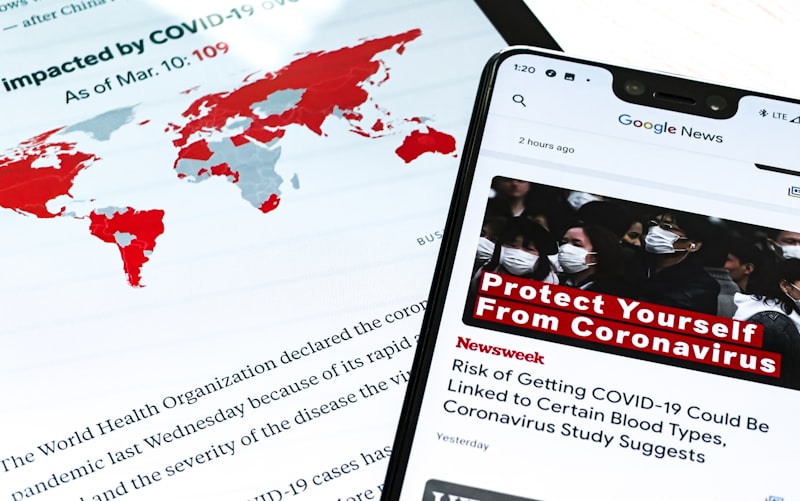
On September 24, 2026, the final-expense agency Choice Mutual announced a ChatGPT tool that lets a shopper begin comparing whole-life coverage for end-of-life costs in a conversational interface. According to the agency, the tool draws pricing from more than 20 insurers — it names Mutual of Omaha, Aflac, TruStage, Aetna, and Transamerica among them. Shoppers who want to proceed leave the chat: they move to Choice Mutual’s website, provide contact details, and connect with a licensed agent.
That routing detail is the most important part of the announcement. ChatGPT is not the insurer here, and no purchase is completed inside the conversation. The AI channel sits at the very beginning of the search, where a consumer is still asking “what does this cost?” rather than “how do I apply?” The quote is a starting point, not a contract.
Choice Mutual also illustrates why the policy version matters as much as the price. One named product, Living Promise — a final-expense whole-life policy issued by United of Omaha Life Insurance Company, a Mutual of Omaha company — comes in two materially different benefit designs. The level-benefit version has no initial waiting period for the full death benefit. The graded-benefit version limits the benefit for death from natural causes during the first two years. A consumer comparing two quotes from the same carrier may be looking at two different products. If your health qualifies you for the level-benefit version, a cheaper-looking graded quote is not actually cheaper coverage. Our guide to final-expense insurance in 2026 walks through how those designs compare.
2. UK’s Subcontext Brings Governed Life Insurance to ChatGPT and Claude
The Choice Mutual launch is a US agency piloting an AI storefront. Across the Atlantic, a UK insurtech called Subcontext has gone further: it announced that life and protection insurance products can now be distributed directly through both ChatGPT and Claude, embedding what it describes as a governed sales and underwriting stack inside the two most widely used large language model interfaces.
The timing was deliberate. The move came one day after the Financial Conduct Authority (FCA) invited firms to bring forward technology solutions to close what it has formally identified as the UK’s pure protection gap — an estimated 31 million adults without life or income protection cover. In July, the FCA published the Mills Review into AI and the future of retail financial services, which explicitly named agentic AI as a viable route to reaching underserved consumers who never enter traditional insurance distribution channels.
What does the integration actually do? According to Subcontext, a consumer can ask an insurer’s branded assistant — hosted inside ChatGPT or Claude — about life cover, receive a real-time price based on product rules, verify eligibility, have exclusions explained, and book a callback, all inside a single conversation. Whole-of-market distributors can access their full product panel through Subcontext’s integration with Iress’ The Exchange, a widely used UK protection-sourcing platform, so advisers are not locked into one insurer’s proposition.
The governance architecture is the substance beneath the headline. Subcontext’s co-founder and CTO Mike Laming says the firm built “the agentic insurance stack that sits on top of large language model infrastructure… with governance built in.” Every AI-generated answer is audited, and the eligibility, pricing, and underwriting rules are held as configuration rather than inferred by scraping. That design responds directly to the FCA’s position that AI autonomy must arrive with oversight, accountability, and a clear audit trail. The company was founded in 2026 by Alain Desmier and Mike Laming, who previously co-built Contact State, a lead-verification business acquired by Verisk in 2021.
For US consumers, the practical takeaway is directional rather than immediate. Regulated insurance distribution inside consumer AI assistants is now a live model, not a thought experiment. The question American shoppers should ask about any AI-generated quote is the same one the FCA is asking: who is accountable when the answer is wrong? For now, the safe rule is that a conversational quote is an invitation to get a formal quote, not an offer of coverage.
3. AccuQuote’s Automated Underwriting Patent — and the Anti-Selection Question
Less visible than a ChatGPT plugin but arguably more consequential is a patent. US Patent 12,705,675 issued on August 11, 2026 to AccuQuote, Inc., a Schaumburg, Illinois term-life brokerage. The granted claims describe a chain of machine-learning models that parses an in-force risk-transfer policy into a parse tree, extracts its premium and exclusion parameter values, and hands the result to a pattern-detection unit configured to trigger automated underwriting processes.
Read that carefully: the engine does not read an applicant. It reads a contract. The technical path to the grant is instructive. The examiner initially rejected all 20 claims under 35 U.S.C. §101 as abstract, and the applicant overcame that rejection by deleting the policy-generation step from claim 1 and replacing it with an architectural limitation — a pipeline shape — which was then allowed on April 7, 2026. The inventors of record are Thomas Young and Rory Creedon, and the filing carries a Swiss priority date back to 2022.
The actuarial consequence sits in who can act on the output. Point a contract-reading engine at a large book of term policies and you get a ranked list of policyholders whose current contract is worse than what the market would write them today. But only part of that list can act on the information: a policyholder whose health has deteriorated since issue cannot replace coverage on better terms and keeps the old contract. If healthier lives systematically replace and impaired lives stay, the surviving block gets more expensive to insure — a phenomenon called anti-selective lapse — even though nothing changed about the underlying lives.
Why should a consumer care? Because level-term premiums are supported by a lapse assumption historically calibrated on surrender behavior driven by affordability, life stage, and agent activity — none of which correlate strongly with insurability. An engine that turns lapse into a function of who can still pass underwriting changes that math. The immediate consumer-facing lesson is simpler than the actuarial one: before you cancel or replace an existing policy, understand that your ability to replace it depends on your health today, not your health when you bought it. Locking in coverage while you are insurable remains the single most durable move in this market.
4. Tongyang Life Expands AI From Enrollment to Claims in Korea
If you want to see where the AI-in-insurance story is heading operationally, look at Korea. Tongyang Life, an affiliate of Woori Financial Group, is extending digital and AI technology across the entire insurance lifecycle — from policy enrollment to claim submission and assessment.
The company operates a pre-assessment system that lets applicants check eligibility before submitting an application. Previously, customers could only verify eligibility after completing the plan design and application and undergoing underwriting review. With the pre-assessment system, customers who give prior consent can receive underwriting results during the plan-design stage, identifying coverage limitations or conditional approvals early enough to adjust the application in advance.
On the claims side, Tongyang Life has introduced AI-based optical character recognition (OCR) to classify documents automatically, cutting the time needed to handle claim requests. During claim review, it runs a Claim Risk Detection System (CRDS) that analyzes claim data and accident history to flag high-risk cases with possible fraud. The reported results: fraud-detection efficiency up 63%, and the automated claim-review rate up from 22% to 45%. The strategy is expected to continue after the company’s integration with ABL Life, with CEO Sung Dae-kyu naming AI-driven customer service and sales competitiveness as priorities for the combined company.
The consumer read-across is mostly encouraging, with a caveat. Faster, more consistent claims review benefits policyholders — but the same systems that flag fraud also decide which claims need a human look. The right question for any carrier adopting this technology is not “how fast?” but “how do you handle the case the model gets wrong?” For buyers, the lesson is to keep documentation clean: a complete, legible claim file moves through an automated pipeline far more smoothly than one that requires manual reconstruction.
5. Banner Life Reprices OPTerm Term Life — October 22 Deadline
Here is the most concrete, actionable item in this roundup. Banner Life made a rate change to its OPTerm term-life product on September 22, 2026. Applications received at the carrier’s home office by October 22, 2026 — along with applications already pending — will receive the most favorable applicable premium under the new rates. Applications received October 23 or later must use the new rates.
The repricing covers level-period premiums for seven OPTerm lengths: 10, 15, 20, 25, 30, 35, and 40 years. Banner lists all underwriting classes and coverage bands within its scope. The policy fee and payment-frequency factors did not change. Crucially, “favorable-rate treatment” does not mean every applicant’s premium fell — the applicable price depends on the individual case.
Compare Free Life Insurance Quotes
Answer a few questions and see personalized rates from 50+ carriers in about two minutes. No obligation.
Secure form — your information is encrypted and never sold.
The deadline has a trap in it. For AppAssist and digital submissions, Banner counts receipt of the formal application, not the initial drop ticket. A shopper who assumes a drop ticket preserves prior-rate eligibility can miss the window. Banner also notes that direct-access partners may ask it to consider reissuing a recently issued policy at new rates while the free-look period remains open — but that is a request for consideration, not automatic repricing.
| Banner Life OPTerm Item | Detail |
|---|---|
| Rate change effective | September 22, 2026 |
| Favorable-rate cutoff | October 22, 2026 (formal application received at home office) |
| Term lengths repriced | 10, 15, 20, 25, 30, 35, 40 years (level-period premiums) |
| What did NOT change | Policy fee and payment-frequency factors |
| Digital submission rule | Drop ticket alone does not meet the deadline — the formal application must reach the carrier |
| New York policies | Issued by William Penn; carries a separate May 7 William Penn rate change |
| Starting coverage | Renewable, convertible coverage from $100,000; issue-age limits vary by term |
One more caution for shoppers: Banner warns that less-frequently updated marketing samples should not be used to quote a client, and the consumer examples on its rate page are labeled January 15, 2026 — they cannot establish a September applicant’s price. If you are comparing term quotes right now, use a live quoting tool and confirm you are looking at the current rate band for your age and term. Our breakdown of term life insurance rates by age explains how those bands are set.
6. NAIC Policy Locator Tops $17 Billion in Matches
The National Association of Insurance Commissioners (NAIC) says its life insurance policy locator has matched consumers with nearly $17 billion in benefits since the service began in 2016. The September 3, 2026 update covers results through July 31 and reports more than 780,000 matches from over 1.5 million requests. Those figures are cumulative matches, not payments made during 2026.
The number points at a problem that can outlast the original sale: survivors often do not know which company issued a policy, or even whether one existed. The locator sends a search request into an insurer process; it does not turn the request itself into a claim approval.
Three boundaries matter for anyone using it:
- It is for the deceased only. You cannot use the locator to find a policy on a living person.
- It is slow by design. NAIC says searches can take 90 business days or longer. Silence can mean no match or that you are not entitled to the information — it is not a public certification that no coverage existed.
- It cannot trace a renamed insurer. When the original carrier is known but its name has disappeared, a different process applies: mergers, name changes, and block sales can shift responsibility for an older contract, and state insurance departments can help trace those corporate changes.
Those two situations — an unknown policy and a known-but-vanished insurer — are often lumped together as “lost insurance,” but they require different evidence. An old policy with a legal company name gives you a paper trail through corporate records. An unknown policy after a death is a search across insurers. Neither establishes the amount payable without the insurer’s later review. If you are organizing your own estate now, the practical move is to tell your beneficiaries which insurer holds your policy and where the documents live — the single cheapest way to prevent your family from ever needing this tool. See our 2026 life insurance buying guide for a document checklist.
7. Allianz Pre-Registers a Second Life Reinsurance Sidecar, Sconset Re II
The last story is the most institutional, and it answers a question most buyers never ask: where does the capital behind your death benefit actually sit?
Allianz appears to be planning a second iteration of its Sconset Re life reinsurance sidecar. Two new structures matching the naming convention of the first vehicle have been pre-registered in Bermuda: Sconset Re II Ltd. and a limited partnership called Sconset Reinsurance II Capital LP. The first Sconset Re launched in late 2024 as a Bermuda-domiciled life and annuity reinsurance sidecar, backed by institutional investors and supported by Allianz’s own asset manager, PIMCO.
At its launch, Allianz ceded a US $4 billion block of fixed index annuity risk to the sidecar and said it expected a further $5 billion to $10 billion of new life and annuity risk to follow over time. In the second quarter of 2026, Allianz said it received its first dividend payment from its investment in Sconset Re — an early sign the structure is working as designed. No transaction details are available for the new entities, and the structures are not yet fully registered or licensed, so this is a signal of intent rather than a closed deal.
A reinsurance sidecar is a financing vehicle: it lets an insurer transfer a defined block of risk to third-party capital while keeping the administration of the policies. For policyholders, the relevance is financial strength. Reinsurance transfers risk but does not eliminate it — it moves it to a counterparty whose own credit quality then matters. That is exactly why the ratings agencies scrutinize offshore reinsurance dependence, and why a buyer comparing carriers should still check the carrier’s own rating. You can look up any carrier’s financial-strength rating through the AM Best ratings search.
How AI Distribution Changes What You Pay
Stories 1 through 4 look like technology news, but they touch the single largest cost inside a life insurance premium: distribution. AI can quote, screen, and pre-assess faster than an agent can, and it never sleeps. That efficiency is real — and it is also exactly where the hand-off from a conversational quote to a formal, legally binding application still needs a human licensed to sell in your state. The table below maps what is already automated in 2026 versus what still requires a person.
| Step in Buying Life Insurance | Automated in 2026? | What Still Needs a Human |
|---|---|---|
| Getting an initial price estimate | Yes — chat tools and online quoting | Confirming the price matches your health class |
| Comparing products | Partly — AI can list options | Matching the right policy version (e.g., level vs graded benefit) |
| Eligibility pre-check | Yes — pre-assessment systems | Interpreting a conditional or rated offer |
| Underwriting | Increasingly — accelerated and AI-assisted | Appeals and complex medical histories |
| Formal application | Digital, but not instant | A licensed agent or the carrier’s own process |
| Claims review | Increasingly — OCR and risk detection | Final adjudication and contested claims |
The through-line: AI is compressing the front of the buying process — awareness, initial pricing, and pre-qualification — while the contractual and fiduciary steps still require an accountable human. That is why an AI quote is a starting point, not a decision. And it is why the carriers and agencies that win will be the ones that keep the audit trail clean when the model gets a case wrong.
Key Takeaways
- A quote is not a policy. AI-generated prices from Choice Mutual inside ChatGPT, or from any chatbot, are invitations to get a formal quote — not offers of coverage.
- The Banner Life OPTerm window closes October 22, 2026. For digital submissions, the formal application — not a drop ticket — must reach the carrier in time.
- Check the policy version, not just the price. A level-benefit and a graded-benefit final-expense policy from the same carrier can look identical in a chat window and behave very differently at claim time.
- Replace coverage while you are insurable. Automated underwriting that reads old contracts makes anti-selective lapse a real long-term pricing force.
- Tell your beneficiaries where your documents are. Nearly $17 billion in matched benefits shows how often families simply do not know a policy exists.
Steps to Protect Yourself When Buying Life Insurance in 2026
- Start anywhere, finish with a licensed professional. Use a chat tool or comparison site to ballpark price, then confirm the offer with an agent licensed in your state.
- Ask which policy version you are being quoted. Confirm level versus graded benefits, waiting periods, and whether the quote assumes a health class you can actually qualify for.
- Verify the carrier’s financial strength. Check the AM Best rating and the NAIC complaint index before you sign, not after.
- Watch deadlines that change your price. A rate change with a formal-application cutoff — like Banner’s October 22 date — can cost you a decade of higher premiums if you miss it.
- Document your coverage for the people who will file the claim. Name the insurer, the policy number, and where the documents live, and store that with your will.
Frequently Asked Questions
Can I buy life insurance inside ChatGPT in 2026?
Not directly. Choice Mutual’s ChatGPT tool lets you compare final-expense quotes from more than 20 insurers, but shoppers who want to proceed move to the agency’s website and connect with a licensed agent. No purchase is completed inside the conversation, and a displayed quote is not an issued policy.
What is the Banner Life OPTerm October 22, 2026 deadline?
Banner Life repriced its OPTerm term-life product on September 22, 2026. Applications received at its home office by October 22, 2026 — and applications already pending — receive the most favorable applicable premium under the new rates. Applications received October 23 or later use the new rates. For digital submissions, the formal application must reach the carrier; a drop ticket alone does not preserve prior-rate eligibility.
What is the NAIC Life Insurance Policy Locator?
It is a free service from the National Association of Insurance Commissioners that searches participating insurers for a deceased person’s life insurance or annuity contracts. It has matched consumers with nearly $17 billion in benefits since 2016 across more than 780,000 matches. It cannot be used for a living person, searches can take 90 business days or longer, and it cannot trace a policy held by a carrier that has since merged or been renamed.
How accurate is AI in life insurance underwriting?
AI is already reducing onboarding costs and speeding up underwriting, but the life-and-health segment still lags property-and-casualty adoption because medical evidence — records, physician statements, and labs — is harder to standardize. The fair conclusion for 2026: AI accelerates screening and pre-assessment, while complex histories and appeals still require human review.
What is the FCA’s push on AI insurance distribution?
The UK’s Financial Conduct Authority published the Mills Review in July 2026, which named agentic AI as a viable route to reaching consumers who never enter traditional insurance distribution. Days later, UK insurtech Subcontext launched life and protection distribution inside ChatGPT and Claude. The FCA’s requirement is that AI autonomy must come with oversight, accountability, and a clear audit trail.
Will AI replace life insurance agents?
It is more likely to compress the front of the buying process than to replace the licensed step. AI can quote, pre-assess, and compare, but a formal application still runs through a carrier or an agent licensed in your state, and someone accountable must handle the cases the model gets wrong. Expect AI to change how you start shopping, not to eliminate the accountable human at the signature line.
What is a life reinsurance sidecar, and does it affect my policy?
A sidecar is a financing vehicle that lets an insurer transfer a defined block of risk to third-party investors while keeping the administration of the policies. Allianz’s Sconset Re is one example; a second vehicle, Sconset Re II, has been pre-registered in Bermuda. Your policy stays with your carrier, but the capital backing it is partly third-party money, which is why ratings agencies track offshore reinsurance dependence and why you should still verify your carrier’s own financial-strength rating.
Related Resources
- AM Best ratings search — verify a carrier’s financial-strength rating before you buy.
- NAIC consumer resources — policyholder rights, complaint filing, and the Life Insurance Policy Locator.
- IRS Publication 525 — how life insurance proceeds, policy loans, and surrenders are taxed.
- Best Life Insurance Companies of 2026 — how we compare carrier strength, complaints, and transparency.
- No-Medical-Exam Life Insurance in 2026 — how accelerated underwriting decides your coverage.
- Life Insurance Fraud in 2026 — what to watch for during the application process.
Get Your Free Life Insurance Quote
Whether you are chasing Banner’s October 22 rate deadline, comparing level versus graded final-expense coverage, or simply locking in term coverage while you are healthy enough to qualify, the first step is a real quote — not a chatbot’s estimate. Compare personalized rates from 50+ top-rated carriers, confirm the policy version and health class, and get guidance from a licensed agent who can answer for the numbers. Get your free life insurance quote today →
