

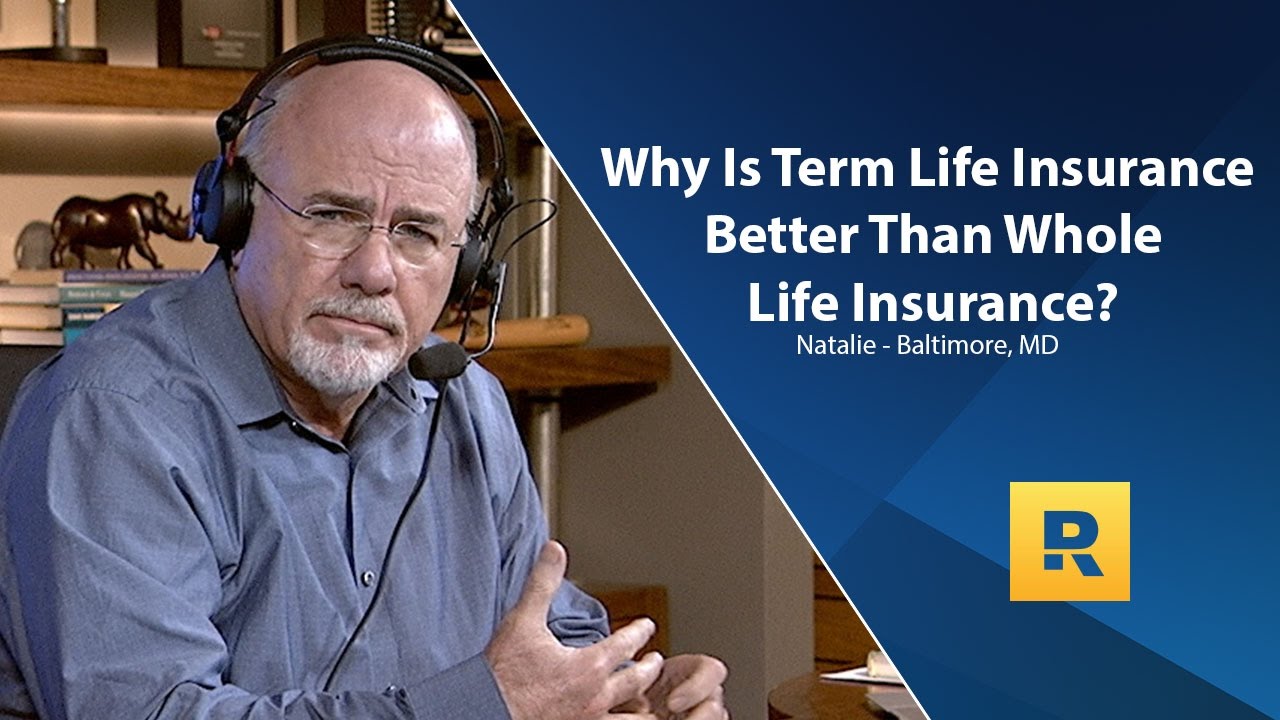

Don’t waste money on whole life insurance. Get a term life policy today: Visit the Dave Ramsey store today … [wpcode id=”4722″] Term insurance is a type of life insurance that provides coverage for a specific period of time, usually 10, 20, or 30 years. Whole life insurance, on the other hand, provides coverage for your entire life. Both types of insurance can provide financial protection for your family in the event of your death, but there are some key differences between the two that make term insurance the better choice for many people. The primary difference between term and whole life insurance is the cost. Term insurance is typically much less expensive than whole life insurance, making it a more affordable option for many people. This is because term insurance only covers you for a specific period of time, while whole life insurance covers you for your entire life. As a result, term insurance is a much more cost-effective way to provide financial protection for your family in the event of your death. Another advantage of term insurance is that it is more flexible than whole life insurance. With term insurance, you can choose the length of the policy, the amount of coverage, and the premium payments. This allows you to customize the policy to fit your needs and budget. Whole life insurance, on the other hand, is a fixed policy that cannot be changed once it is purchased. In addition to being more affordable and flexible, term insurance also offers more options for beneficiaries. With term insurance, you can choose multiple beneficiaries, allowing you to provide financial protection for your family in the event of your death. Whole life insurance, however, only allows you to designate one beneficiary. Finally, term insurance is a better choice than whole life insurance because it is more tax-efficient. Term insurance premiums are generally not subject to income tax, while whole life insurance premiums are. This means that you can save money on taxes by choosing term insurance over whole life insurance. In conclusion, term insurance is a better choice than whole life insurance for many people. It is more affordable, more flexible, offers more options for beneficiaries, and is more tax-efficient. If you are looking for a way to provide financial protection for your family in the event of your death, term insurance is the way to go.
Frequently Asked Questions
How much does whole life insurance cost?
Whole life insurance typically costs $150-$300/month for $250,000 in coverage for a healthy 30-year-old. While more expensive than term life, it provides lifelong coverage and builds cash value that grows tax-deferred.
What is the cash value of whole life insurance?
Cash value is the savings component of a whole life policy that grows over time at a guaranteed rate. You can borrow against it, withdraw from it, or use it to pay future premiums. Cash value grows tax-deferred and typically becomes accessible after 3-5 years.
Can I borrow from my whole life policy?
Yes, you can borrow against your policy’s cash value at any time. Policy loans have low interest rates and don’t require credit checks. However, unpaid loans reduce your death benefit and may trigger tax consequences if the policy lapses.
Where can I compare whole life insurance quotes?
You can compare free whole life insurance quotes from 50+ providers right here on Life Quotes Web. Our comparison tool shows side-by-side rates in under 2 minutes — get your free quotes now.
Compare Free Whole Life Insurance Quotes Today
Get personalized rates from 50+ providers. No obligation, no medical exam required.
🛡️ Get Your Free Whole Life Insurance Quote →🔒 256-bit SSL Encrypted | ⭐ 4.8/5 Rating | 🏆 50+ Providers

